A personal testimony from East Germany
Valentine’s Day
in Stasi prison
On 14 February 1989, I was arrested at the age of 18. I wanted to live freely. Instead, I entered a period of imprisonment that stays with me to this day.
Read my story14 Feb — 20 Oct 1989
I was 18 at the time — legally an adult, but not quite grown up. I was training as a tailor and had already won a fashion award. You could say I was famous — at least by the standards of the time. I wanted to go to Paris, the city of fashion, and dreamed of a life in freedom.
As a young gay man who had come out at school at the age of 14, I felt constrained and watched in East Germany. I regularly met friends from Lower Saxony in East Berlin and planned to leave the German Democratic Republic (GDR) for West Germany. The Stasi had already set its sights on me.
Before I could carry out my plan on 16 February 1989, I was arrested on Valentine’s Day, 14 February. From that day onwards, interrogations, files and locked doors shaped my daily life. On this website, I tell and document my story.
“There, my hopes of freedom were confronted with a harsh reality — one that would change my life forever.”
Mario V.W.B.R. Obst
Chronology · 1989
Between arrest
and freedom
The arrest
On Valentine’s Day, criminal proceedings were opened against me. The Stasi took me to the Andreasstraße remand prison in Erfurt.
Surveillance and registration
My contacts, my sexual orientation and my wish to live on my own terms became matters for state control and meticulous record-keeping.
“In the name of the people”
The Erfurt-Mitte local court sentenced me to one year and two months in prison for attempting an “unlawful border crossing”.
Emigration directly from prison
In an internal record, the Stasi stated that my subsequent emigration to West Germany would be approved. At the same time, I was to be barred from returning to the GDR.
Until 20 October 1989
After weeks without letters, visits or contact with the outside world, I was taken from my cell. Only during the train journey did I realise that I was on my way to West Germany.

The place
Andreasstraße,
Erfurt
Behind these walls, I was at the mercy of a system that controlled people, intimidated them and turned them into files.
After more than 30 years, I returned to Erfurt — primarily because of my parents. It meant I could spend some of our remaining time together with them.
During a visit to Andreasstraße, I approached the Andreasstraße Memorial and Education Centre, run by the Ettersberg Foundation. This gave me a new role: today, as an eyewitness, I share my experiences with young people from Germany and other countries and answer pupils’ questions.
The former prison is now more than a place in my own history. It has also become somewhere I can pass on my memories and speak with a new generation about freedom, dictatorship and responsibility.
Stasi documents
A person,
recorded on paper
Decades later, I gained access to my Stasi records. What was once created in secret now helps me understand how events unfolded and reconstruct my story.


15 February 1989 / Top secret
My case in the Stasi daily report
Just one day after my arrest, my planned journey to freedom appeared in the central reporting of the Ministry for State Security (MfS). My life was reduced to a few lines of administrative text.
Read the report and its context →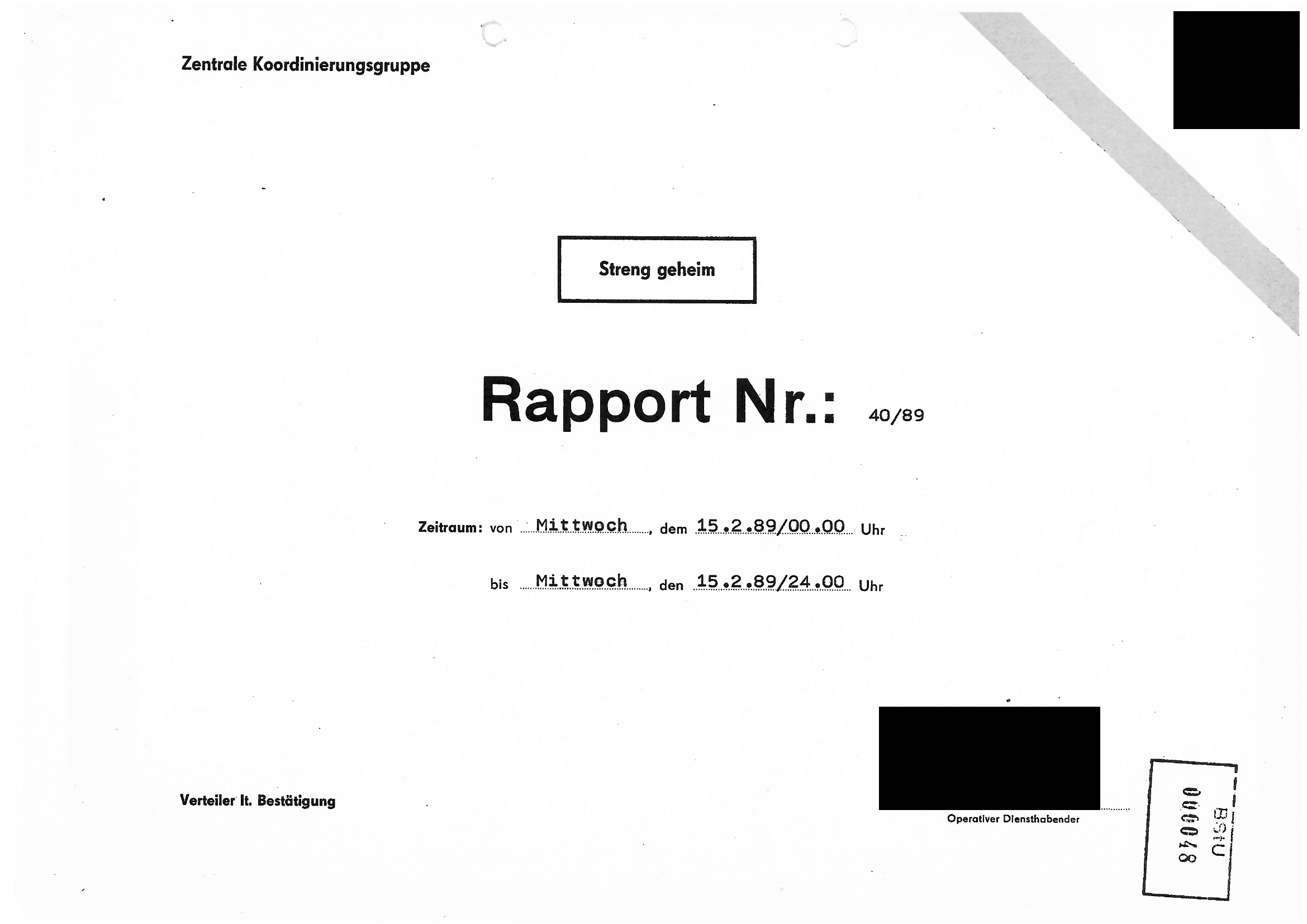
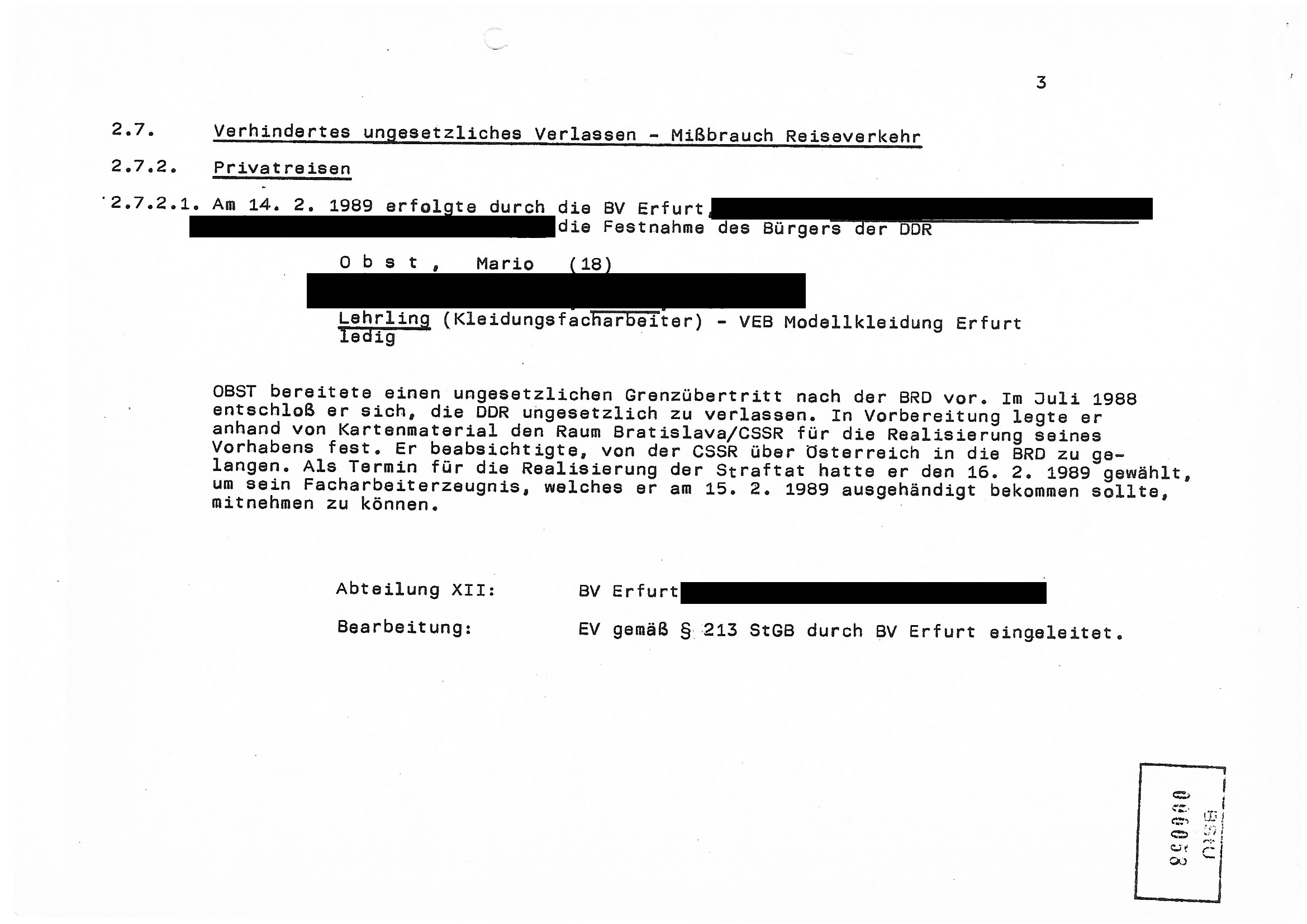
20 October 1989 / Release
Until 20 October 1989
While I was held in isolation in Karl-Marx-Stadt, the authorities had long since prepared my release to West Germany. The sentence-enforcement file records the date and destination — but not what I experienced that morning.
Read the file and my recollections →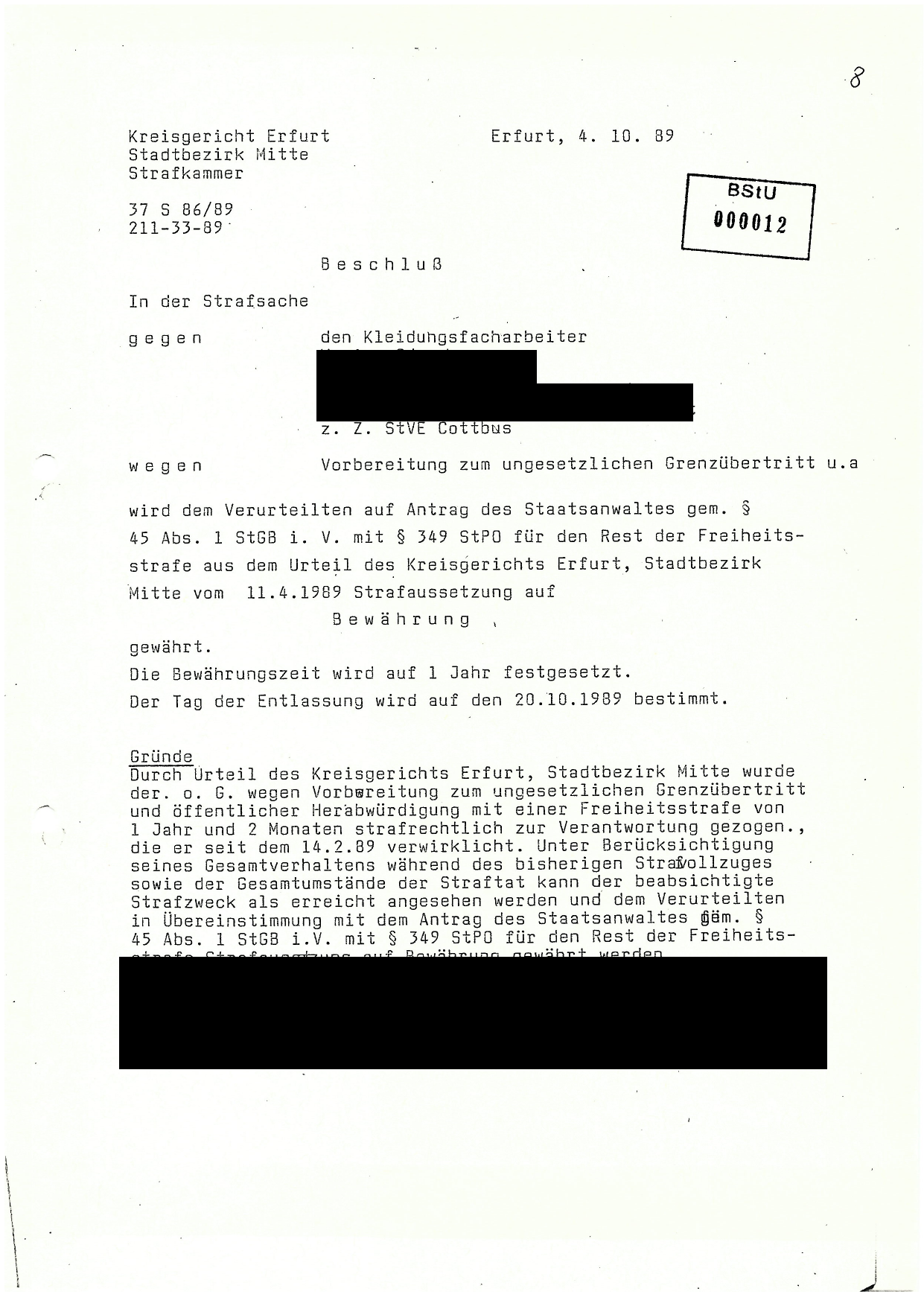
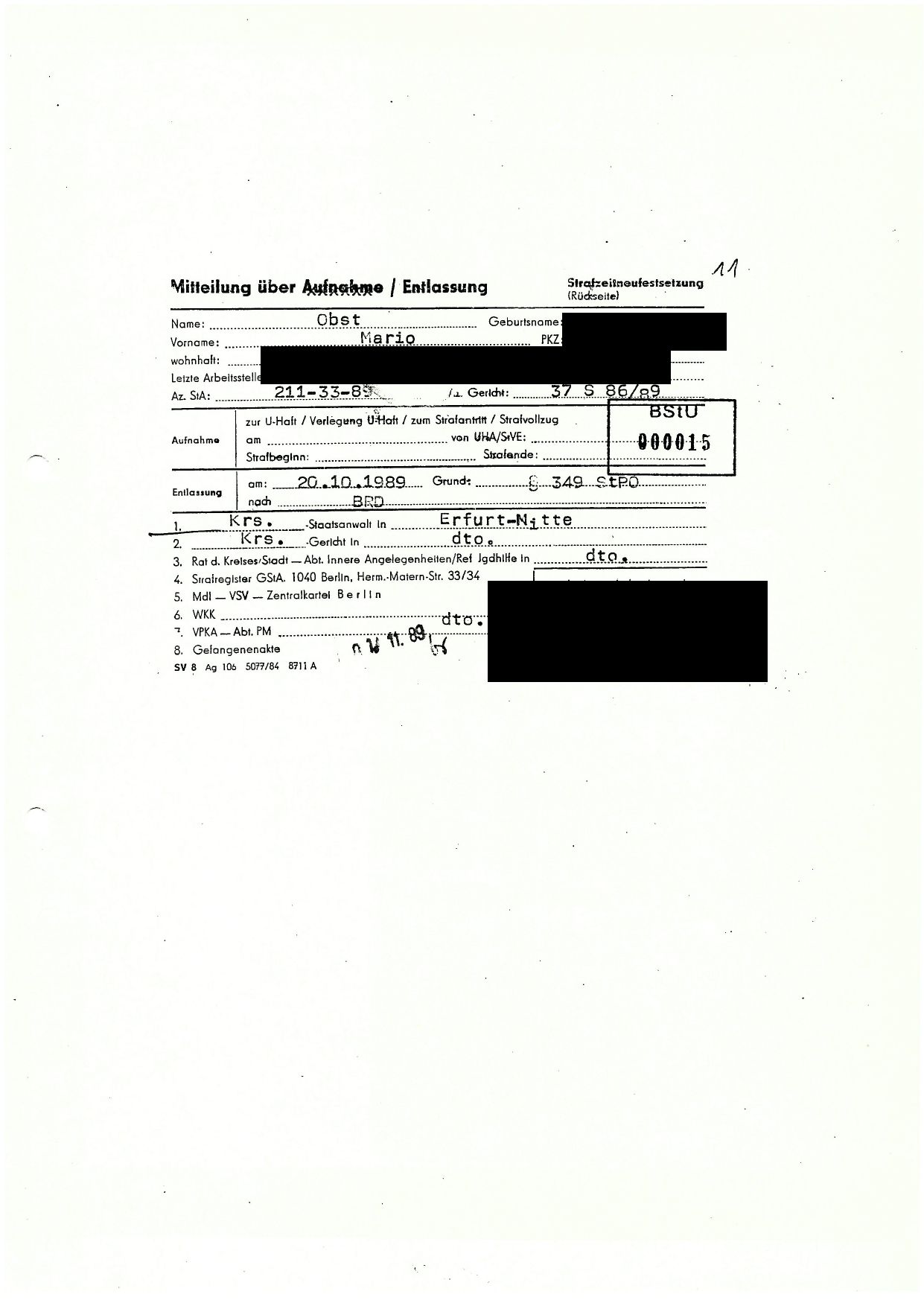
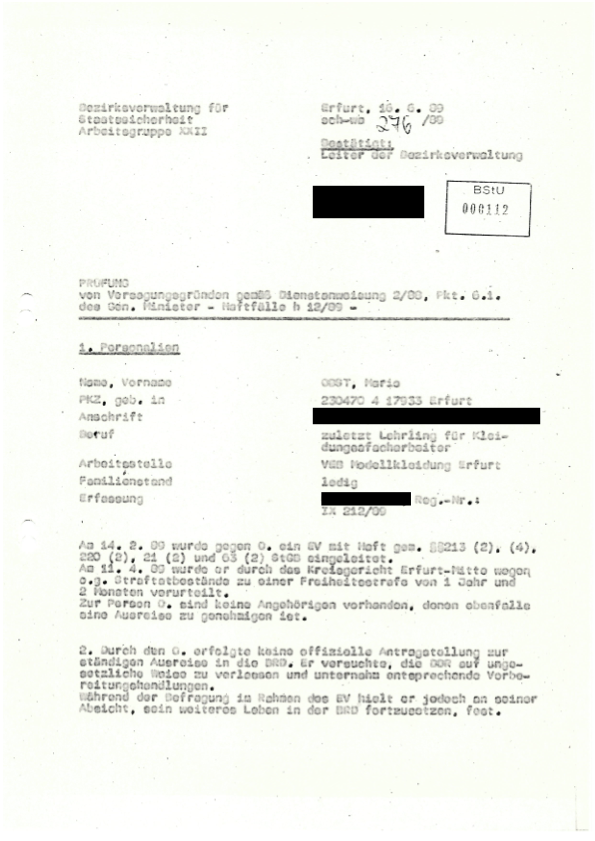
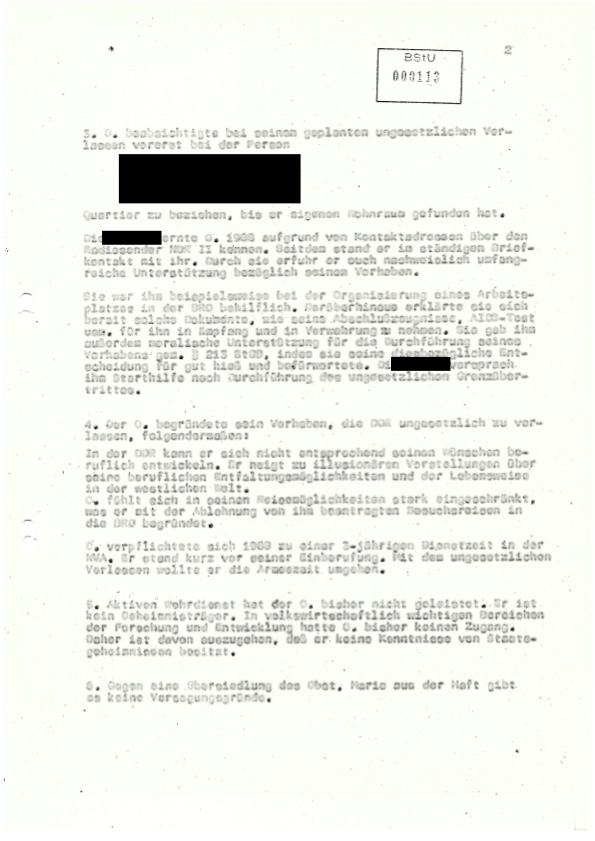
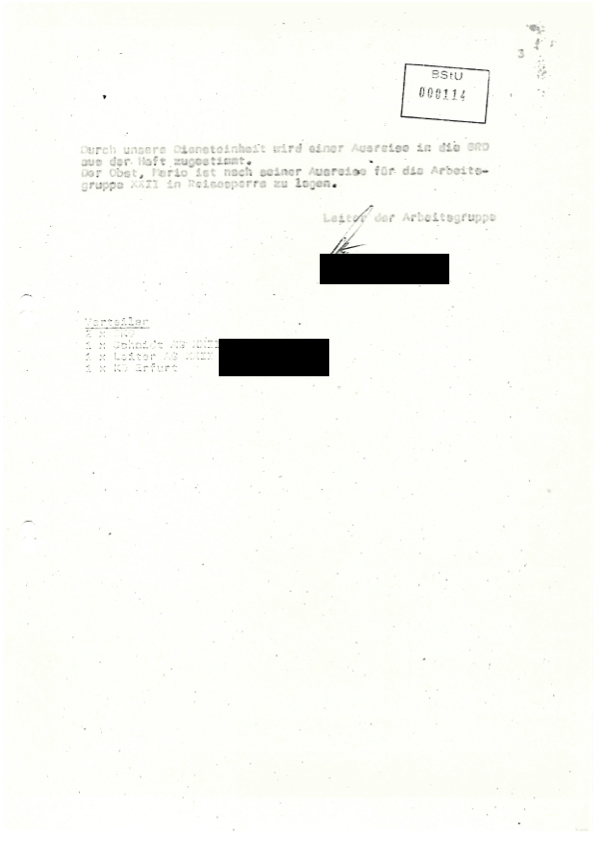
June 1989 / A decision about my life
Emigration directly from prison — without an application
Under the heading “Review of grounds for refusal — prisoners”, the East German state apparatus examined my permanent emigration to West Germany. I had never applied to emigrate. My position was clear: freedom is not something you apply for.
Read the records and my corrections →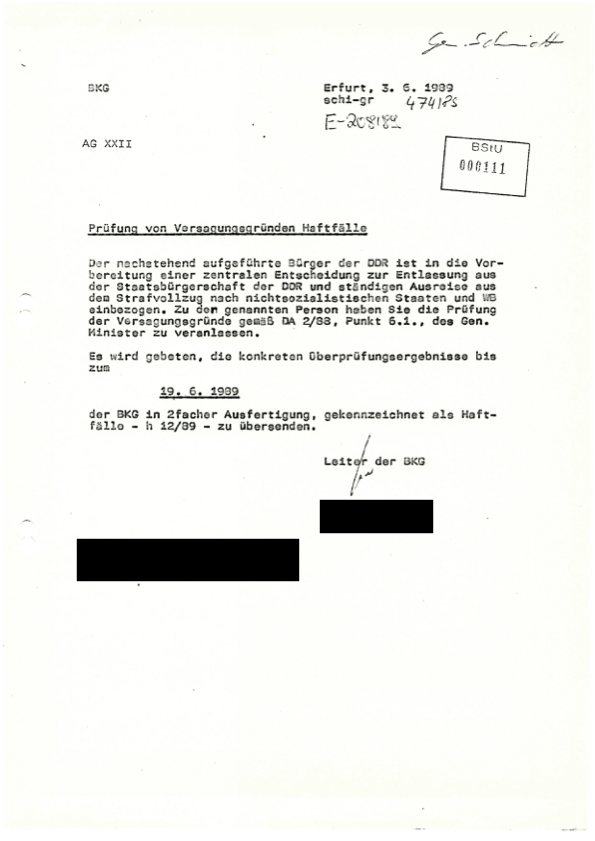
Why I
tell this story
Opening my files and returning to these dark chapters is not easy. But sharing this story matters.
These records are both personal evidence and documents of contemporary history. They show what the absence of freedom meant for one individual. Remembering does more than preserve the past — it helps us understand the value of freedom today.
Yours,
Mario V.W.B.R. Obst
The full account
Memories, chronology
and original records.
Read my story in detail and in chronological order — from my childhood in East Germany through my arrest and conviction to the surviving Stasi records.
Open the full chronology